|
| Quantity: | |||||||||
|---|---|---|---|---|---|---|---|---|---|
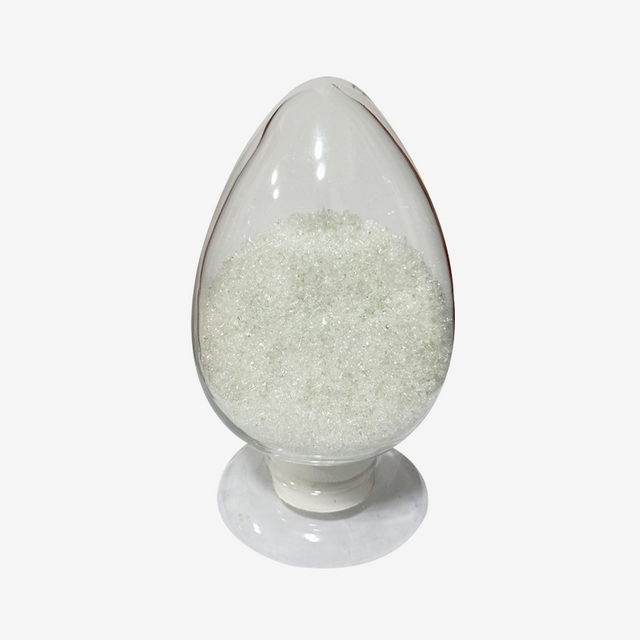
| Wide applicability, high brightness, strong color intensity—ideal for glass pigments and crafts. | |||||||||
Initial Melting Point: 500°C
Applicable Temperature: 650°C–850°C
CTE: 260
Wide applicability, high brightness, strong color intensity—ideal for glass pigments and crafts. Significantly lowers melting temperature (as low as 650–750°C), drastically shortening firing time. Fully vitrified surface achieves mirror-like flatness with no bubbles/defects. Compatible with all bodies (earthenware to bone china). For art collectibles.
| Serial Number | Ingredient Name | Content (%) | Serial Number | Ingredient Name | Content (%) |
| 1 | LOSS(700℃) | <0.05 | 15 | Li2O | 0 |
| 2 | Al2O3 | 2 | 16 | PbO | 50 |
| 3 | SiO2 | 43 | 17 | ZnO | 0 |
| 4 | Fe2O3 | 0 | 18 | SrO | 0 |
| 5 | CaO | 0 | 19 | MnO | 0 |
| 6 | MgO | 0 | 20 | Rb2O | 0 |
| 7 | K2O | 0 | 21 | Cs2O | 0 |
| 8 | Na2O | 0 | 22 | CdO | 0 |
| 9 | TiO2 | 0 | 23 | P2O5 | 0 |
| 10 | Zr(Hf)O2 | 0 | 24 | F | 0 |
| 11 | B2O3 | 3.5 | 25 | SO3 | 0 |
| 12 | BaO | 0 | 26 | NiO | 0 |
| 13 | CuO | 0 | 27 | Cr2O3 | 0 |
| 14 | CoO | 0 | - | - | - |
High-Lead Reduction Glaze is an eco-innovative coating with <0.1mg/L lead leaching (tested per GB 31604.34-2016 (National Food Safety Standard for Lead Leaching of Food Contact Materials) and EU Regulation (EC) No. 1907/2006), exceeding EU REACH and GB 12651-2003 (National Standard for Ceramic Tableware Safety) standards for food-contact ceramics. It uses boron-based fluxes (specifically zinc borate) to replace 90% of traditional lead compounds—traditional lead glazes contain 5–8% lead oxide, while this formulation contains <0.01%—while retaining the glossy transparency and color vibrancy of lead-based glazes. It is available in clear and colored variants (12 standard hues, including cobalt blue and iron red).
Regulatory Compliance: Eliminates export barriers for markets with strict lead restrictions, including the EU, U.S. (FDA Title 21 CFR 179.45), Japan (JIS S 2042), and Canada (Health Canada CMDR). This ensures seamless market access for ceramic manufacturers targeting global consumers.
Health Protection: Reduces soil and water contamination risks by 40% compared to conventional lead glazes—critical for manufacturing facilities and disposal sites. It also protects workers during production, as it emits no lead dust or fumes during firing.
Performance Parity: Matches traditional lead glazes in hardness (Mohs 6) and thermal shock resistance—withstands 150°C to 20°C temperature cycles (10 times) without cracking. It also has excellent color stability, resisting fading under UV light (tested per ASTM G154 for 1000 hours).
Target Products: Exported tableware (plates, bowls, mugs), children’s ceramics (sippy cups, snack bowls), and food-contact vessels (soup tureens, serving bowls). It is also suitable for decorative ceramics sold in markets with strict environmental regulations.
Firing Parameters: Optimized for 800°C–900°C firing (low-fire range) to minimize VOC emissions—fire at 850°C for 30 minutes in an oxidizing atmosphere (electric kiln recommended). Avoid reducing atmospheres (gas kilns without oxygen control), which can affect lead leaching levels.
Quality Control: Requires ISO 17025-accredited lead leaching testing post-production for each batch (batch size ≤10,000 pieces). A certificate of compliance (CoC) is provided with each order, simplifying customs clearance for exports.
Q: Does it cost more than traditional lead glaze?
A: Only 12% higher in raw material costs, which is offset by reduced export rejection risks (down 15% annually) and lower compliance costs (no need for lead remediation or retesting). For large orders (10,000+ kg), bulk discounts are available, reducing the cost difference to 8%.
Q: Can it achieve bright colors?
A: Yes, compatible with cobalt (blue), iron (red/brown), copper (green), and manganese (purple) oxide colorants for vivid, lead-free hues. Color intensity can be adjusted by increasing colorant concentration (0.5–3% by weight), with no impact on lead leaching levels.