|
| Quantity: | |||||||||
|---|---|---|---|---|---|---|---|---|---|
| Creates a soft glaze surface with vivid coloration, widely used in matte glazes. | |||||||||
Initial Melting Point: 900°C
Applicable Temperature: 1050°C–1150°C
CTE: 165
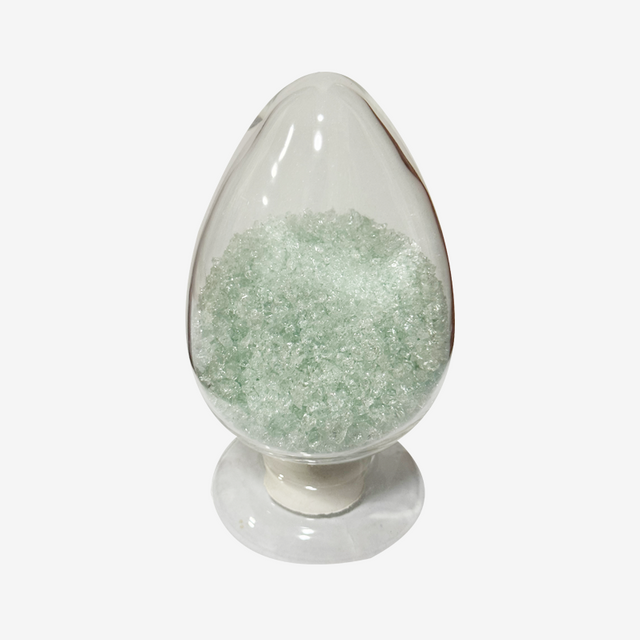
Creates a soft glaze surface with vivid coloration, widely used in matte glazes. Glaze exhibits a silk-like sheen (20°–50° matte) with warm, comfortable tactility—avoiding light pollution of glossy tiles. High-zinc content enhances toughness to reduce micro-scratches, maintaining long-term matte aesthetics. Excellent fixation of metal oxides (e.g., iron/cobalt) ensures stable hues. Zinc-barium synergy improves slurry suspension for even application, reducing pinholes/shrinkage. Ideal for microcement-style floor tiles.
| Serial Number | Ingredient Name | Content (%) | Serial Number | Ingredient Name | Content (%) |
| 1 | LOSS(700℃) | <0.05 | 15 | Li2O | <0.01 |
| 2 | Al2O3 | 11.62 | 16 | PbO | 0.07 |
| 3 | SiO2 | 48.04 | 17 | ZnO | 3.30 |
| 4 | Fe2O3 | 0.20 | 18 | SrO | 0.46 |
| 5 | CaO | 13.85 | 19 | MnO | 0.01 |
| 6 | MgO | 2.46 | 20 | Rb2O | 0.01 |
| 7 | K2O | 2.99 | 21 | Cs2O | <0.01 |
| 8 | Na2O | 2.45 | 22 | CdO | <0.01 |
| 9 | TiO2 | <0.01 | 23 | P2O5 | <0.05 |
| 10 | Zr(Hf)O2 | <0.01 | 24 | F | <0.05 |
| 11 | B2O3 | 2.78 | 25 | SO3 | 0.12 |
| 12 | BaO | 11.48 | 26 | NiO | <0.01 |
| 13 | CuO | <0.01 | 27 | Cr2O3 | <0.01 |
| 14 | CoO | <0.01 | - | - | - |
Art Ceramic Craft Glaze is a customizable, high-expression coating designed for handmade ceramics, catering to artists, hobbyists, and small-batch producers. It offers variable opacity (from fully transparent T01 to opaque O01, with semi-transparent T02 as a midpoint) and supports layering effects—three coats of different hues can create gradient or "galaxy" patterns—making it a favorite for artisanal sculptures, decorative pottery, and ceramic jewelry. It is water-based for easy cleanup, with low odor (VOC content <50g/L, meeting EU EN 13999-1).

Creative Versatility: Enables color mixing (up to 3 hues per batch), trailing (using squeeze bottles for fine lines), and brushwork details (e.g., stippling, dry brushing) unavailable in industrial glazes. Artists can achieve custom effects like "crackle-over-color" or "crystal-in-matte" by combining it with other craft glazes.
Kiln-Change Effects: Produces unique color variations based on firing atmosphere—oxidizing atmospheres (electric kilns) yield warm tones (orange, yellow), while reducing atmospheres (gas kilns with limited oxygen) create cool tones (blue, gray). This unpredictability adds artistic depth to handmade pieces.
Handmade Compatibility: Adheres to uneven surfaces (e.g., hand-thrown pottery with finger marks, textured clay slabs) without running or pooling. Its flexible formulation (contains acrylic binders) accommodates clay shrinkage during firing (up to 8% linear shrinkage), reducing glaze cracking.
Application Techniques: Suitable for brushing (use synthetic bristle brushes for smooth lines), dipping (dip time 2–3 seconds for even coverage), and spray application (1.0mm nozzle, 30cm distance). It dries in 24 hours at room temperature (20–25°C) for reworking—artists can add details or correct mistakes before firing.
Artistic Applications: Ceramic jewelry (pendants, earrings), statement vases (tall, sculptural designs), gallery-grade sculptures, and custom home decor (wall hangings, candle holders). It is not recommended for food-contact items unless sealed with a food-safe topcoat.
Firing Flexibility: Works in electric, gas, and raku kilns across a wide temperature range (600°C–1100°C). Low-fire (600°C–820°C, cone 06) yields brighter colors, while high-fire (1000°C–1100°C, cone 10) creates more durable, stone-like finishes.
Q: How consistent are the colors?
A: Intentional 10–15% variation enhances artistic uniqueness—this is a feature, not a flaw. Color charts (provided with each purchase) predict base tones, but kiln temperature, atmosphere, and application thickness will affect the final result. Sample firing (1–2 test pieces per batch) is recommended for color-critical projects.
Q: Can it be used on low-fire clay?
A: Yes, offers low-fire (cone 06, 820°C) and high-fire (cone 10, 1280°C) formulations. Low-fire clay (e.g., earthenware, terracotta) pairs best with the low-fire glaze, as it matches the clay’s shrinkage rate. High-fire clay (porcelain, stoneware) requires the high-fire formulation to avoid glaze crazing.